i.
Tier-graded evidence
Each library entry states what the source says, how much uncertainty remains, and what the information cannot tell you about an individual.
Explore plain-language education about published genetic research. Briefing intake is paused, and the waitlist is open for availability updates.

Each library entry states what the source says, how much uncertainty remains, and what the information cannot tell you about an individual.
The education library explains published findings and why personal and family history can change their meaning.
Use the library to prepare questions for a qualified healthcare professional about information already in your report.
You can see what a source supports, what remains uncertain, and what cannot be concluded from one finding.
Direct-to-consumer genetic reports can be difficult to interpret on their own. Personal and family history may change what a finding means, so take questions about your report to a qualified healthcare professional.
A conversation with a qualified healthcare professional can add context and help you avoid treating one result as a complete answer.
If a report raises a health concern, take the original report to a qualified healthcare professional. They can decide what other information may be relevant to your circumstances.
The Heritable Health library summarizes published research so you can prepare questions about an existing report. It does not provide personal health advice.
If something in a report concerns you, discuss the original report with a qualified healthcare professional who can consider it alongside personal and family history.
A small selection of educational entries with source links, uncertainty notes, and questions to consider.

We know this genomic information can be heavy, so we have gathered some news articles that might brighten your day, feel free to visit Happy Good News and Genomes News for the best and brightest news articles we could find today.
Join the waitlist for updates when report-based briefings accept new members. The education library remains available.
Join the WaitlistBrowse the education library and note the topics you want to understand.
Join the waitlist for updates about briefings based on existing genetic reports.
If briefing intake opens in your region, we will explain the next steps before you share a report.
Heritable Health is developing plain-language briefings based on genetic reports members already have. The service is not open for intake.
New briefing intake is paused. Join the waitlist for availability updates.
New report sharing is paused. The education library remains available without an upload, and accepted formats will be published before intake opens.
Our privacy policy explains how genetic information is stored, used, and shared.
Take the original report to a qualified healthcare professional who can consider it alongside your personal and family history. Access and costs vary by location and by the professional you contact.
If briefing intake opens, we will explain how the service works before you share any information.
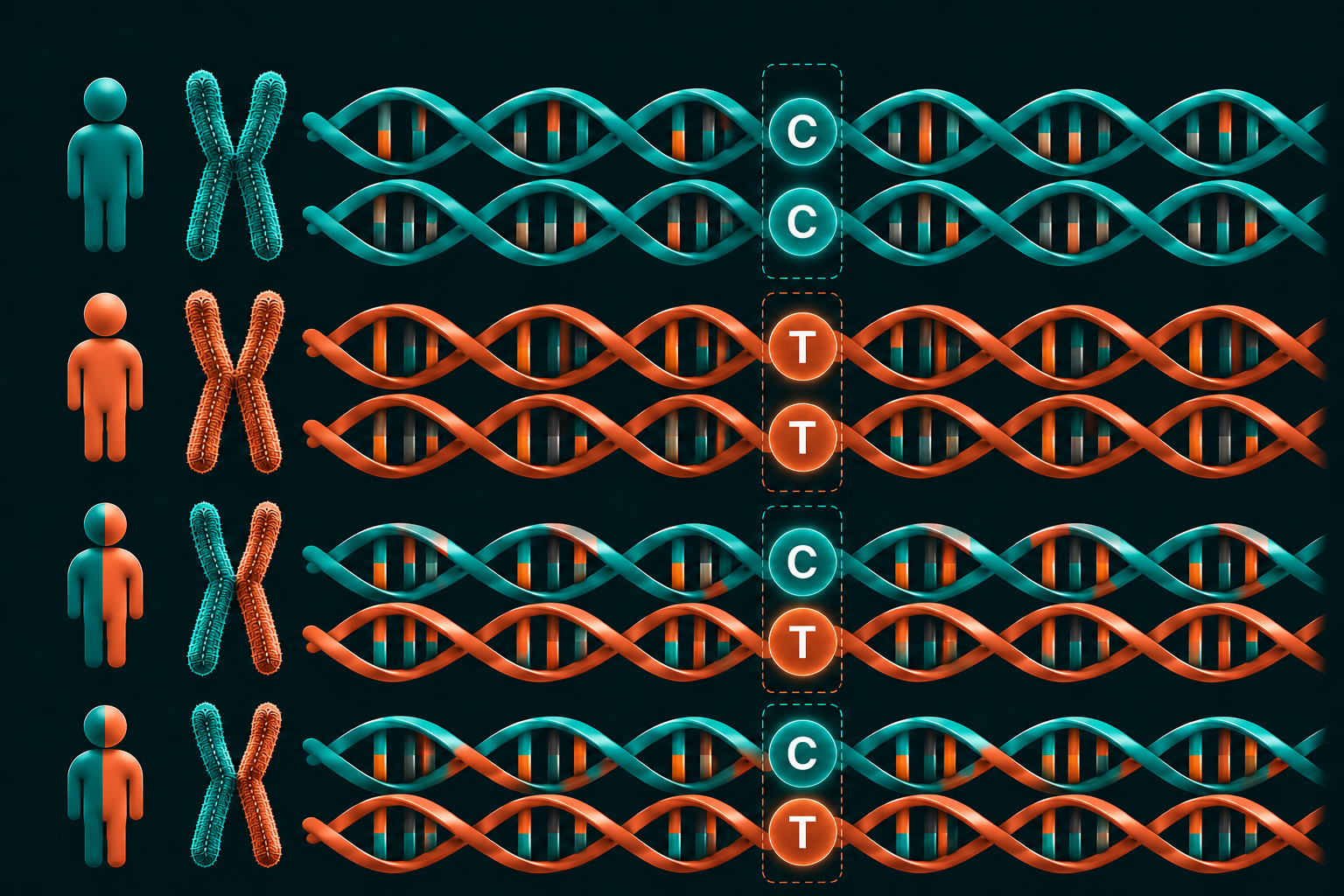
People share most of their DNA, with many small differences from one person to another. Researchers study these differences to learn about inherited traits, but one difference alone does not provide a complete picture of a person's health.
A single nucleotide polymorphism, often shortened to SNP, is a difference at one position in DNA. Researchers study patterns across many such differences; one SNP alone does not determine a person's health.